

Bike Rack
Your Leading Qingdao Kesheng Hongda Hardware Products Co., LTD. Supplier
KSHD brand was established in 2008 in Qingdao, China, specializing in the R&D, manufacturing and sales of urban furniture. The factory has more than 16 years of advanced management and production experience. Our main products are metal trash cans, bollards, bicycle racks, outdoor benches, picnic tables, ashtrays and many other outdoor town furniture. Products are exported to more than 80 countries and regions, especially Spain, France, Switzerland, Netherlands, Arabia, Mexico, Canada, United Kingdom, United States, Australia and other countries. We are an experienced factory company in the field of outdoor street furniture, and we have established a fully automatic robot production line and a thermoplastic coating process line with an annual output of 160,000 pieces.
Why Choose Us?
Advanced equipment
The company has advanced laser cutting machines, CNC punching machines and other automation machines.
Quality control
The company has successfully introduced ISO9000 quality management system, established a quality management system in line with international standards.
Production market
The products sell well in Spain, Britain, Europe, America and Australia. To achieve friendly cooperation with companies from many countries and regions.
OEM service
With professional design, production and sales teams. Samples can be customized according to your drawings, and quality control and inspection will be carried out to meet your requirements.


What is Bike Rack?
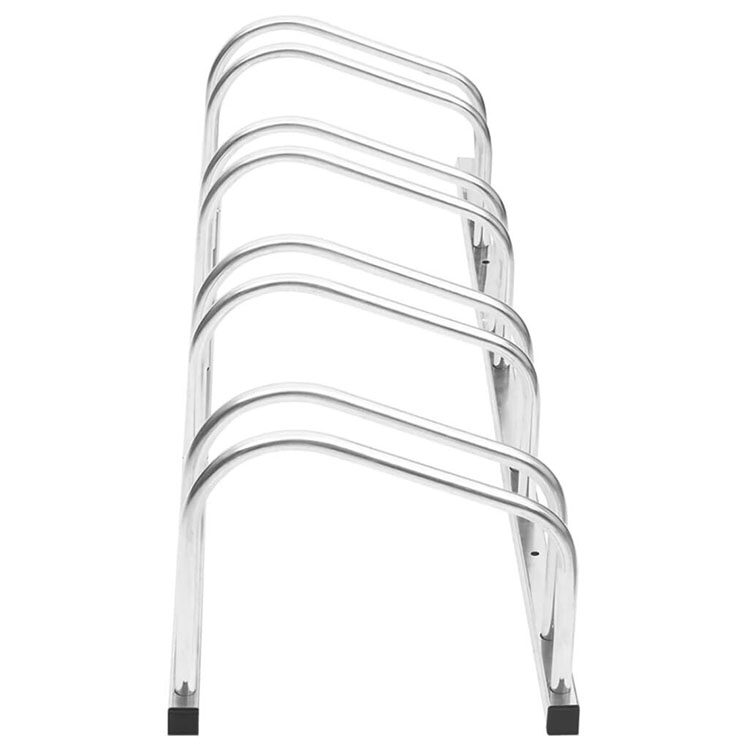
A bicycle parking rack, usually shortened to bike rack and also called a bicycle stand, is a device to which bicycles can be securely attached for parking purposes. It may be freestanding, or securely attached to the ground or a stationary object, such as a building. Indoor racks are commonly used for private bicycle parking, while outdoor racks are often used in commercial areas. General styles of racks include the Inverted U, Serpentine, Bollard, Grid, and Decorative. The most effective and secure bike racks are those that can secure both wheels and the frame of the bicycle, using a bicycle lock.
Bike racks can be constructed from a number of materials, including stainless steel, steel, recycled plastic, and thermoplastic. Durability, weather resistance, appearance and functionality are important factors when choosing this material.
The visibility of the bike rack, adequate spacing from automobile parking and pedestrian traffic, weather coverage, and proximity to destinations are all important factors determining usefulness of a bicycle rack, helping to increase its usage and assure cyclists that their bikes are securely parked.
Benefits of Bike Rack
Increase parking capacity at little cost
Bike racks are an affordable business investment that can free up existing parking spaces and stretch the capacity of your parking facilities. Bike racks can be installed on the pavement outside your property or inside your warehouse or office.
Cycle parking increases the efficiency of your existing parking facilities, freeing up valuable space for other vehicles. For example, a cycle parking rack for five bikes can take up the space of just one car.
Secure bike parking drives traffic to your business
When shopping centers, industrial estates, and office parks allow people to bring their bikes to the establishment premises, it improves their image and makes them more appealing. Not only does this create a positive first impression, but it also offers new customers the opportunity to combine their shopping trip with a trip to work.
People who commute on a bike also tend to spend more time at the same premises and make repeat visits, increasing a business’s revenue.
Bike racks are good for the environment
Cycling is one of the best ways to help your business reduce its carbon footprint. Ideally, a bike rack would encourage your employees to ride their bikes to work rather than driving, therefore reducing the number of cars on the road and, in turn, harmful pollutants discharged into the atmosphere. If you install bike parking at your business, you could save money and reduce your carbon footprint at the same time.
Modern bike racks improve your curb appeal
Thanks to the ever-growing demand for bike racks in commercial premises, many manufacturers have introduced modern designs which feature a high level of functionality and aesthetic appeal.
For example, bike docking stations are a type of bike rack designed to offer stable and secure parking. They’re also designed to look great, so they can create an attractive addition to your premises without eating into valuable space.
Boosts staff morale and health
Cycling to and from work is an excellent way of getting fit and keeping healthy. It is proven that commuting by bike helps lower stress and makes employees more productive.
Bike rack facilities can encourage staff to cycle to work, save them the hassle of searching for parking space and make their commute more enjoyable.
U bike racks: This style is known as u bike racks, inverted u racks or staple racks. It may be the simplest when it comes to design, but it still offers key features necessary for bike parking. This rack will support a bicycle in two places, which keep it upright. It allows riders to lock the frame and wheel to the rack. The u rack is durable and considered one of the most secure. There are other designs beyond the u shape that still classify and function as a u bike rack. These are the most commonly used bike racks since the design allows it to be placed very close to destinations, offering convenience to bikers. Each single rack can hold two bikes, and multiple racks can be lined to secure as many bikes as needed.
Post & ring racks: These racks are a bike parking favorite that provide good security and support for bicycles. When working with this rack, the height of the ring needs to be considered. If the ring is too high, it can be difficult to lock a frame and wheel to it.
Wheel pocket racks: Bike racks that have a wheel pocket offer an additional level of support, keeping the bicycle standing. The well for the wheel also ensures the bicycles are parked in the proper position within the rack. A staggered vertical height allows for more bikes to be parked in an area.
Wave & serpentine racks: The fluid curves of these racks are recognized by cyclists, assuring them of safe and dependable parking. Round and square models alike are compatible with u-locks that lock to both the frame and wheel. They also can be ordered with loops to fit as few or as many bikes as a facility needs to meet regulations.
Bollard-style racks: Used to limit access to bike-only trails and parking areas, bollard-style racks also provide cyclists with secure parking. They are robust and highly visible and can be used as security or traffic barriers to help regulate large crowds. This type of rack comes in various widths and styles.
Grid-style racks: Grid-style racks are traditional and easy to use. The grid design is ideal for high-volume bike parking. Most models can be ordered in single or double sided. They are compact and are recommended for short-term bike parking only.
Innovative racks: These are new variations on traditional bike racks. They offer extra security and character to any setting. They put a twist on basic bike rack designs for added interest and maximum security.
Decorative racks: Decorative racks will add personality and interest to your environment. They are imaginative and playful while still meeting bike parking regulations.
Material of Bike Rack


Low-carbon steel
Standard steel products are fabricated using high-quality, low-carbon steel. This type of steel contains only trace amounts of carbon, which allows for high ductile strength. Steel is an exceptionally strong material used in buildings, bridges and industrial machine parts. When combined with a protective powder coating, it ensures lasting durability for years to come.
Cast ductile iron
Many decorative products are cast using ductile iron. Unlike standard cast iron, which is brittle in nature, ductile iron is made using small amounts of magnesium or cerium to manipulate carbon into formations that won’t compromise material integrity under stress. The result is a metal with high impact properties and resistance to long-term fatigue.
Galvanized
Galvanized bike racks are the most cost-effective option. They’re price-competitive and include a thin film of zinc for corrosion prevention. It’s a drab grey colour with little shine.
Powder-coated
There are a variety of colour options for this type. A dry-powder coat gives a durable, high-gloss outer layer with excellent weather resistance.
Thermoplastic-coated
The polyethene matte finish is often available in a variety of colours. The powder coating for corrosion resistance can match the current decor and provide a smooth finish without runs or drips.
Recycled plastic
Recycled plastic bike racks are built with recycled material, ranging from 35% to 96%. It does not splinter or crack and is more fire-safe than wood. It also emits no hazardous pollutants into the environment.
Stainless steel
The highly durable material for a bike rack is stainless steel construction. It has the highest level of corrosion resistance, is antimicrobial, and has a glossy look that is simple to clean and maintain.
Esteel
The esteel procedure gives a long-lasting and consistent finish. The method is environmentally safe and follows us osha and epa rules.
Metal
Metal is also used to create bike racks. Aluminium or steel are the most common materials for bike racks. They resist the elements and weathering but can rust if not properly treated or coated.
Process of Bike Rack
Use a hacksaw or metal-cutting chop saw to cut the horizontal and vertical pipes to length.
The 86-inch length for the horizontal pipes specified in the materials list makes a rack that holds six bicycles. For every additional bike space beyond this you’ll need 18-1/4-in. Longer horizontal pipes and two more vertical pipes. Each pair of pipes is 16-in. On center away from the next pair.
Follow the plans and prepare two welding jigs from oriented strand board or plywood. These hold the horizontal pipes the correct distance apart during the welding process.
Cut the two triangles according to the plans, then bore holes for the pipes using a 1-3/4-in. Diameter hole saw.
Slip the horizontal pipes into the holes in the welding jigs, with one jig piece at each end of the trio of pipes.
Locate one end of the trio against a wall or other plumb surface to keep the pipes oriented correctly.
Shim one end of the assembly or the other to make all three horizontal pipes level, and the two bottom horizontal pipes level with each other.
Clamp a pair of vertical pipes to each side of the 24-in. Level.
Place this assembly between horizontal pipes near one end.
Carefully remove the wooden welding jigs.
Weld each joint fully.
a: Because the rack is held together only with tack welds at this stage, the rack is not yet strong. Be careful. You’ll find it easier to get good welding results if the bike rack joints are horizontal while welding.
Lay the bike rack flat on the ground.
Weld all of the joints that are horizontal and exposed.
Rotate the rack and repeat the process until all joints are fully welded.
Sand, prime and paint the rack if you want. Painting is optional.
Pro Tip: If you used galvanized steel pipes, zinc-rich primer applied to the welds will keep them from rusting. If you’ve used plain steel pipes, they will rust in the weather without paint. If you like the look of rusted steel, leave the rack bare.
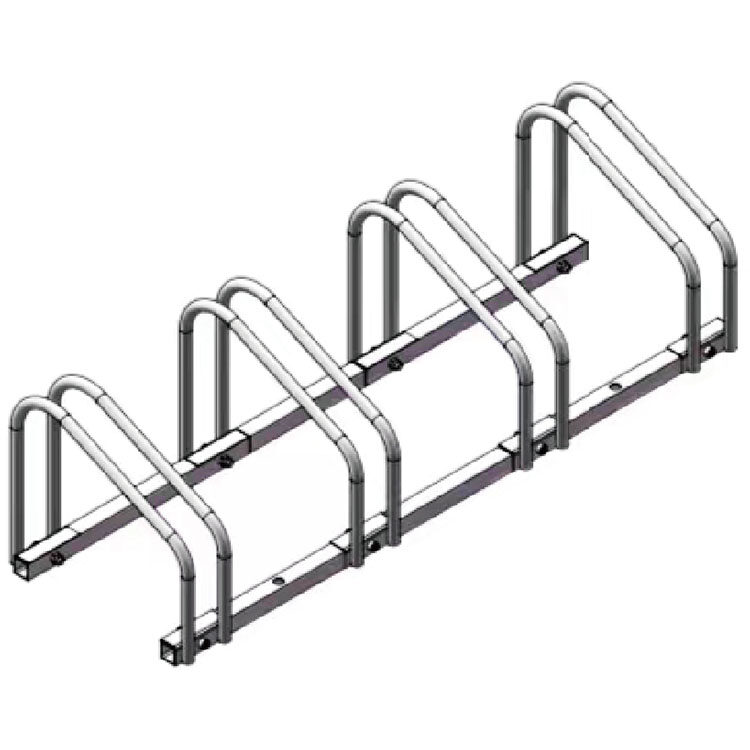
Periodically inspect racks for damage from use or vandalism. Spot paint any scratches or rust.
Ensure all hardware remains securely fastened. Replace missing nuts and bolts.
Assess signage and markings around racks. Refresh any faded paint and reminders.
Verify racks remain securely anchored.
Review usage levels and rearrange racks if certain areas become over/underutilized.
Update racks if newer designs provide better security, capacity, or ease of use.
Concrete is the best and least expensive surface material for a variety of rack types and installation methods. Both in-ground and surface mounts work well on concrete and are easy to install.
Other hard surfaces such as asphalt, pavers or tile may or may not be suitable for a surface mounted option. Factors affecting the suitability of these materials include the thickness of the surface material, the makeup of the below grade material, and climate.
For organic materials such as mulch, dirt and grass, you will need a bike rack with a freestanding option, or you may decide to pour concrete.
Where to Install Your Bike Racks
Choosing the ideal location for bike racks in parks and recreational areas is essential for their success and utilization. Proper placement can significantly impact convenience, security, and overall cyclist satisfaction. Here are vital considerations for where to install your bike racks:
Proximity to pedestrian pathways
By placing bike racks near pedestrian pathways without blocking them, you ensure cyclists have straightforward access while maintaining smooth foot traffic flow, creating a harmonious environment for all park visitors. This strategic placement, recommended by pedestrian and bicycle professionals, optimizes accessibility for cyclists while preserving the ease of movement for pedestrians, enhancing the overall park experience for everyone.
Accessibility
Situating bike racks close to park entrances, amenities, and key attractions ensures they are conveniently accessible to cyclists, making it easier for them to enjoy the park's offerings without worrying about long walks from their bike to their destination. In a kid-friendly bike park, this accessibility is crucial, allowing young cyclists and their families to quickly access the park's features. Surface mount bike racks provide this accessibility efficiently while ensuring bikes are securely parked near park amenities, enhancing the overall experience.
Natural surveillance
Installing bike racks in areas frequented by park visitors or under the watchful eyes of park staff significantly reduces the risk of theft, leveraging the natural flow of people as an effective, informal security measure.
Lighting
Positioning bike racks in well-lit areas enhances their visibility during the darker hours. It significantly improves safety for cyclists parking or retrieving their bikes at night or early in the morning.
Visibility
By placing bike racks in easily visible areas, you boost the security of parked bicycles and simplify the process for cyclists trying to locate a secure spot. This strategic placement deters potential thieves and provides peace of mind for bike owners.
Integration with park design
Selecting rack locations that harmonize with the park's overall layout and aesthetic ensures that these functional amenities add value without disrupting the visual or practical appeal of the park, blending utility with beauty.
Installation Methods for Bike Racks
In-ground mount
The base of the bike rack is embedded into the ground, and secured with an anchor pin for stability. These mounts are known to offer the highest security.
Surface mount
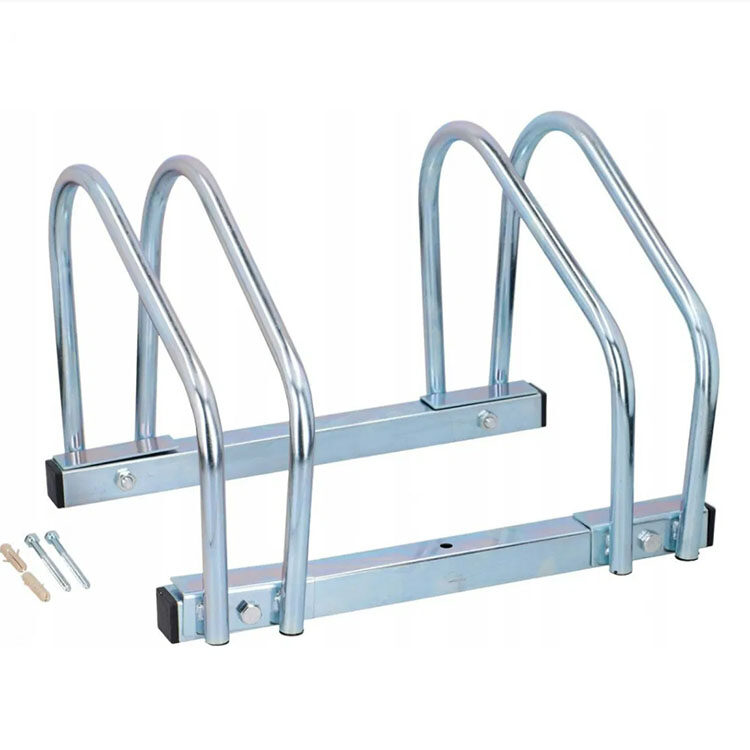
Flanges that extend from the base of the bike rack are secured into the concrete surface with bolts. For added support, surface mounts can be reinforced with extra hardware when secured into an existing piece of concrete.
Rail mount
Rail mounts are useful for connecting multiple U-racks instead of installing each U-rack individually. This is an economical option that reduces labor costs and the number of holes drilled into the concrete surface.
Wall mount
Some bike racks are designed to be mounted to the wall. Bolts are used to connect the flanges of the bike rack to a steady wall. This application is best when floor space is minimal and practical for long-term storage.
Removable mount
A removable mounting system allows the bike rack to become temporarily removable when required. Removable mountings are especially useful in areas with a changing landscape where it may be necessary to remove bike racks to allow temporary access to delivery, maintenance, or emergency vehicles.
Bike Rack Clearance and Spacing
The primary scheme of your bicycle parking design should incorporate adequate clearance between the bike rack and walls, other fixed objects and driving or parked cars.
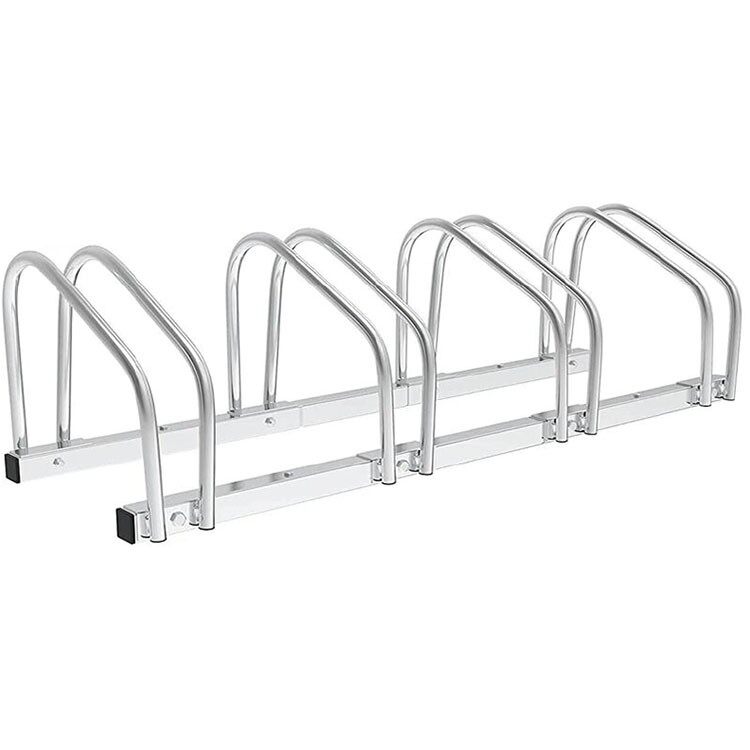
In general, allow for the following
Enough end and side clearance to operate bicycles into and out of the parking area.
Adequate clearance around the rack for cyclists to access and securely lock the bicycle to the rack from the side.
Access to the rack from all sides so all available parking spaces may be used.
The orientation of your bike racks in relation to these elements will also necessitate different placements.
When laying out bike racks parallel to walls or other objects, we recommend
Setback of 48" recommended | 36" minimum from walls and other fixed objects.
Setback of 24" from roads/parked cars.
Setback of 96" from walls to create aisles or allow walkways for pedestrians on sidewalks.
Spacing of 72" recommended | 48" minimum between multiple racks.
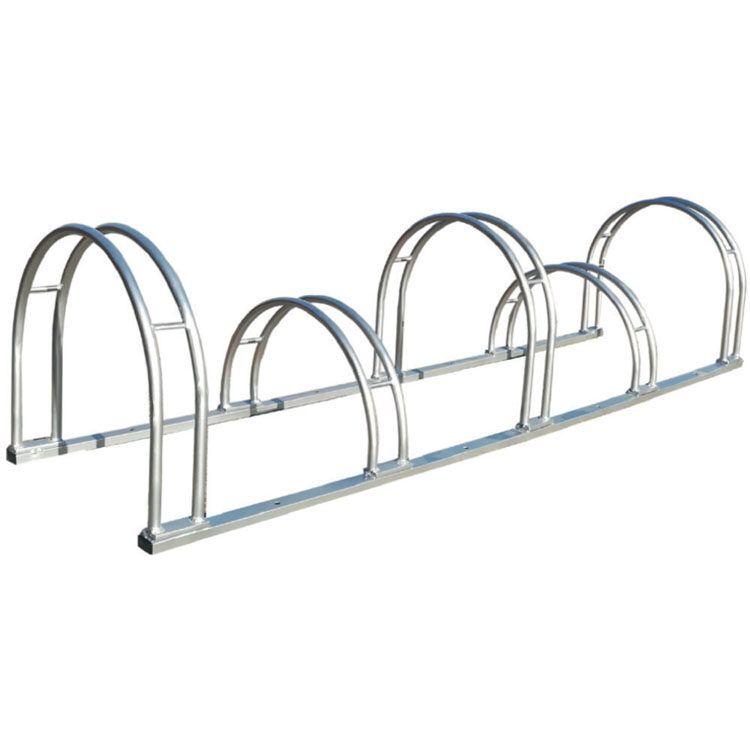
When laying out bike racks perpendicular to walls or other objects, we recommend
Setback of 48" recommended | 36" minimum from walls and other fixed objects.
Setback of 36" recommended | 24" minimum from roads/parked cars.
Setback of 132" from walls to create aisles or allow walkways for pedestrians on sidewalks.
Spacing of 48" recommended | 36" minimum between multiple racks.
Proper spacing between perpendicular bike racks is necessary to avoid handlebar conflicts and allow access from the side of the bike.
How to Install a Bike Rack on Asphalt
With asphalt surfaces, like an existing parking lot, you do not want to install directly into the asphalt.
This material does not hold anchors well enough as they can easily be pried from the surface. If a bike rack is able to be removed from the surface it is mounted to, it becomes useless as the bike lock can simply be slid off the rack and now the bicycle can easily be stolen.
Your first option for installing bike racks on asphalt is to actually cut out an area of the asphalt and area below the surface to do an in-ground mount. You would then pour concrete footings, encasing a portion of the legs of the bike rack in concrete, to securely mount the rack.
A second option would be to use racks on rails. With this, bike racks are mounted to a metal c-channel or rails. The entire unit can then be left freestanding on the asphalt.
Freestanding bike racks could also be considered. These bike racks feature enclosed loops where bicycles can be securely locked to the rack and the lock can't be slid off the rack. This eliminates the need for the rack to be mounted to the surface.
How to Install a Bike Rack on Pavers
When attempting to install a bike rack to a surface covered with pavers, like asphalt, you would not want to install directly to the pavers.
Again, using the bike rack as leverage, thieves and vandals can too easily pry out pavers and then slide the bike lock off of the rack.
The best way to install a bike rack with a surface of pavers is to remove the pavers where the legs of the bike rack are to be installed. Then core out an area below the surface and use an in-ground installation, using concrete to encase the legs of the bike rack.
Bike racks on rails or freestanding bike racks would also be options in this situation.
Our Factory
Qingdao Kesheng Hongda Hardware Products Co., Ltd. has a large imported CNC brick tower automatic punching machine, CNC laser cutting machine, CNC shearing machine, various hydraulic press, welding equipment more than 60 sets. With the ability of self-research and development, design, production and manufacture of various metal products, the advanced level of equipment has reached the level of world-class suppliers. At the beginning of its establishment, the company set up the business philosophy of "focusing on modern management, taking high quality requirements as the foundation, taking market development as the guidance, and taking talent training and appointment as the center". The company has successfully introduced ISO9000 quality management system, established a quality management system in line with international standards, through full participation, careful implementation and continuous improvement of management methods, and strive to pursue perfect quality, provide customer satisfaction needs and do more than customer expectations "more, better" service goals.


Our Certificate

FAQ
As one of the leading bike rack suppliers in China, we warmly welcome you to buy high-grade bike rack for sale here from our factory. All customized products are with high quality and low price. Contact us for quotation.
Bike Stand for Outdoor, Galvanized fork Bike Rack, outside bike rack